Attic Mold Removal Services in North Georgia
Attic Mold Remediation
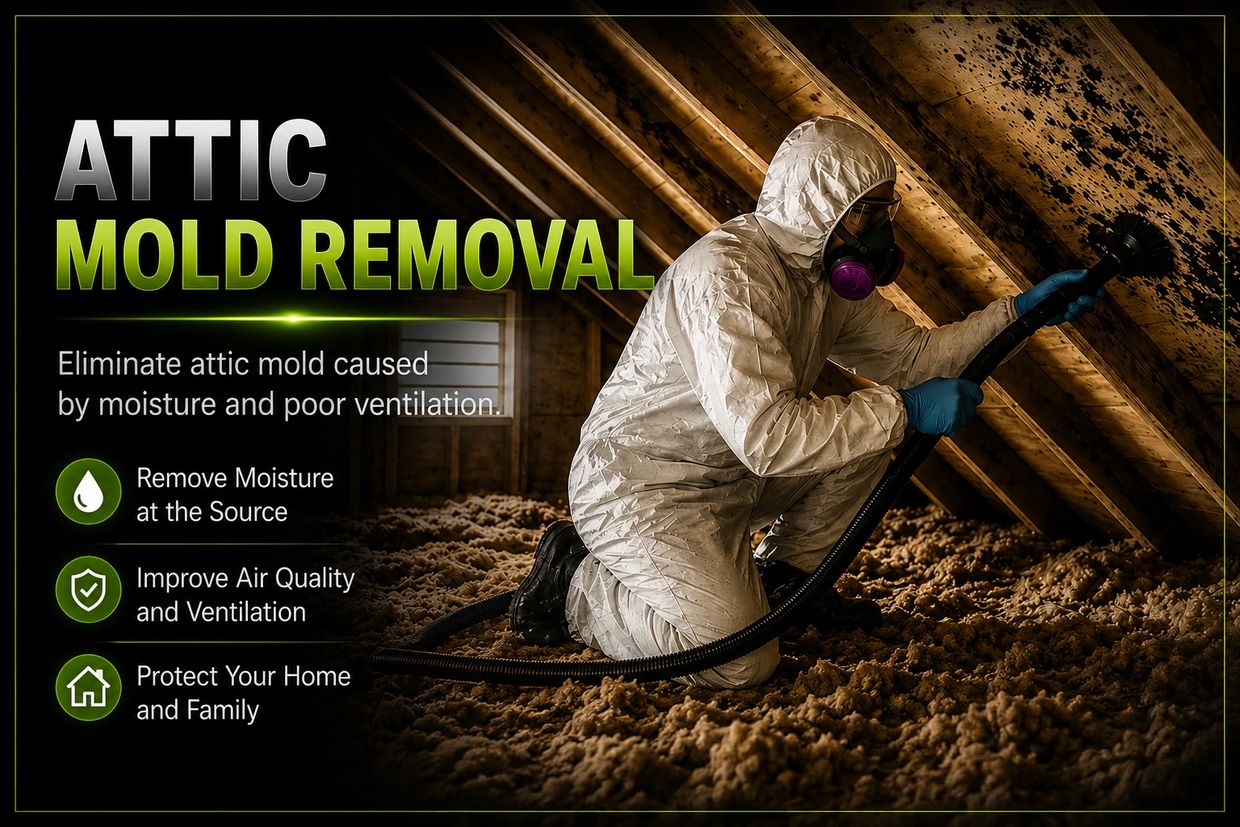
Mold Heroes, LLC specializes in professional attic mold removal services throughout North Georgia, including Cumming, Dawsonville, Gainesville, and surrounding communities.
Attics in our area are particularly vulnerable to mold growth due to North Georgia’s humid climate, heavy seasonal rains, and temperature swings. Common causes include roof leaks from storm damage or aging flashing, poor attic ventilation that traps moist air, bathroom or kitchen exhaust fans improperly vented into the attic, and condensation caused by inadequate insulation. These issues create the perfect environment for mold to thrive on wooden rafters, roof sheathing, and insulation — often before homeowners notice any signs.
Why Choose Mold Heroes for Attic Mold Remediation?
We are the trusted local attic mold specialists who understand the unique challenges of North Georgia homes. Our certified team provides safe, thorough, and long-lasting solutions that not only remove existing mold but also address the underlying moisture problems to prevent future growth.
Our comprehensive attic mold removal process includes:
- Detailed Inspection & Moisture Mapping — Using advanced tools to identify hidden leaks, condensation points, and the full extent of mold growth.
- Containment & Air Filtration — Setting up negative air pressure with HEPA filtration to prevent mold spores from spreading into your living space.
- Safe Removal of Contaminated Materials — Careful removal and disposal of affected insulation, drywall, or other porous materials when necessary.
- Structural Cleaning & Treatment — Cleaning and treating wood framing, rafters, and sheathing with EPA-approved antimicrobial solutions.
- Drying & Prevention — Ensuring the attic is completely dried and recommending improvements in ventilation, insulation, or exhaust fan routing to keep your attic mold-free long-term.
Signs You May Have Attic Mold
- Musty or earthy odors (especially noticeable on hot or humid days)
- Visible dark staining or discoloration on roof sheathing or rafters
- Black, green, or white fuzzy growth
- Increased allergy symptoms or respiratory issues in your household
- Higher than normal energy bills due to poor insulation
Left untreated, attic mold can spread to other areas of your home, damage structural wood, reduce energy efficiency, and affect indoor air quality.

Mold Heroes – Premier Expert Attic Mold Removal & Prevention
Mold Heroes – Trusted Attic Mold Removal for a Fresh, Sanitized Space
Mold Heroes – Trusted Attic Mold Removal & Wildlife Waste Removal for a Fresh, Sanitized Space in North Georgia
North Georgia's humid climate and abundant wildlife make homes in areas like Gainesville, Buford, Flowery Branch, Cumming, Dawsonville, and surrounding regions especially vulnerable to attic mold and wildlife intrusions. Roof leaks, poor ventilation, and condensation often lead to mold growth, while squirrels, raccoons, bats, and other animals frequently invade attics—leaving behind droppings (feces), urine, nesting materials, and contaminated insulation. These wastes not only create foul odors and attract more pests but can also promote mold growth, damage structures, and pose serious health risks like respiratory issues, allergies, histoplasmosis (from bat guano), or other pathogens.
At Mold Heroes, we specialize in comprehensive attic mold remediation and wildlife waste removal (including animal feces cleanup, guano sanitization, and full attic restoration) to restore your home to a fresh, safe, and sanitized environment. As your trusted local experts in North Georgia, we combine advanced mold removal techniques with professional wildlife contamination cleanup for complete results.
Why Choose Mold Heroes for Attic Mold & Wildlife Waste Services in North Georgia?
Our certified team addresses the full scope of attic issues common in humid, wildlife-rich areas like Lake Lanier and the North Georgia mountains. We identify root causes—whether moisture from leaks or animal entry points—and provide lasting solutions.
Key benefits of our integrated services:
- Expert Inspection — Detailed assessment detects hidden mold, moisture, animal entry points, droppings, urine stains, and contaminated insulation using advanced tools.
- Safe Containment & Removal — We seal off the attic to contain spores and contaminants, then safely remove mold, animal feces (squirrel droppings, raccoon waste, bat guano), soiled insulation, and nesting debris with HEPA vacuums and protective protocols.
- Thorough Sanitization — Using antimicrobial treatments, fogging, and disinfectants to eliminate bacteria, fungi, odors, and health hazards from wildlife waste.
- Restoration & Prevention — Repair or replace damaged materials, install new insulation if needed, seal entry points to prevent re-entry, and recommend ventilation or dehumidification upgrades tailored to North Georgia homes.
Homeowners across North Georgia rely on Mold Heroes for honest, high-quality service that protects your family's health and your home's value.
Common Signs You Need Professional Attic Mold or Wildlife Waste Removal
- Musty, earthy, or ammonia-like odors from vents or upper floors
- Visible mold spots, dark stains, or discoloration on wood, rafters, or insulation
- Animal droppings (small pellets from squirrels, piles of guano from bats, or larger feces from raccoons), urine stains, or nesting materials
- Scratching, scurrying, or fluttering noises in the attic
- Increased allergies, respiratory irritation, or fatigue indoors
- Recent roof issues, poor ventilation, or wildlife sightings near your home
Attempting DIY cleanup of mold or wildlife waste can spread contaminants, release harmful spores/dust, and worsen health risks—always trust professionals.
Breathe Easier with Mold Heroes – Your North Georgia Specialists in Mold Remediation & Wildlife Waste Cleanup
Whether you're dealing with stubborn attic mold from humidity or hazardous animal waste from squirrels, bats, raccoons, or other critters, Mold Heroes delivers fast, effective solutions with a commitment to quality, transparency, and complete satisfaction.
Serving Dawsonville, Cumming, Suwannee, Gainesville, the Lake Lanier area, and all surrounding cities in North Georgia—let us make your attic fresh, sanitized, and wildlife-free again.
Ready to restore your home? Contact Mold Heroes today for a free inspection and estimate on attic mold removal, wildlife waste removal, or full restoration services.
Call us now 770-628-6396 schedule. Your healthier, cleaner space is just one call away!
#AtticMoldRemoval #WildlifeWasteRemoval #AnimalFecesCleanup #MoldRemediationNorthGeorgia #GainesvilleMoldRemoval #NorthGeorgiaWildlifeCleanup #MoldHeroes #AtticRestoration

Contact Us
Mold Heroes – Trusted Attic Mold Removal & Wildlife Waste Removal for a Fresh, Sanitized Space
Hours
Open today | 09:00 am – 05:00 pm |